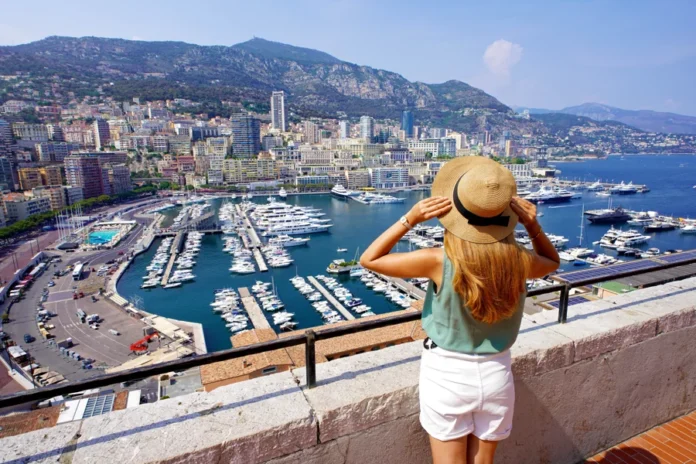
Long known for attracting an older clientele, the Principality appears to be undergoing a clear shift. Increasing numbers of young entrepreneurs and families seeking stability and quality of life now wish to make Monaco their home. A rejuvenation that does not, however, alter the DNA of a market built on long-term asset value.
Highly advantageous taxation, strong real estate value, political stability, quality of life, and safety… Monaco ticks all the boxes of an investor’s paradise. It is therefore no surprise that, over the decades, the Principality has become a magnet for high-net-worth individuals. But who exactly decides to settle in Monaco? When it comes to buyer profiles, there are few surprises: “They are mainly long-term asset investors,” summarizes Kate Dorfman, Director at Caroli Real Estate. “In Monaco, buyers are not seeking high rental yields or short-term plays, but rather investing in the intrinsic value of property in the Principality.”
As for nationalities, the market remains loyal to its roots. Most buyers come from Europe—French, Italian, Swiss, and German clients form the core group. “We’re nevertheless seeing a rise in arrivals from Eastern European countries,” adds Sébastien Segond, co-manager of the Segond Immobilier Group. “We also continue to observe strong demand from British residents, particularly Non-Doms, who keep moving to Monaco.”
From London
This wave from London has also been seen by Jean-Yves Le Graverend, Director of John Taylor Monaco: “We’ve indeed seen new clients—mainly Europeans—who had previously taken up residence in the UK because of the favourable tax regime. Following the policy shift, they are now seeking to place their assets elsewhere. Beyond the tax changes, London has also experienced rising insecurity, prompting many to leave. Naturally, Monaco offers an attractive alternative: centrally located in Europe, extremely secure, and fiscally advantageous.”
What about Russian buyers? Since the start of the war in Ukraine, sanctions and a widespread mistrust toward this nationality have sharply slowed their arrival in Monaco—“with the exception of Russians holding dual nationality or a European residence permit,” notes Kate Dorfman. Other professionals have observed small, occasional waves of interest—for example, among some Canadians or Americans after the last US election—but nothing indicating an underlying trend.
A younger wave of buyers
Whereas Monaco once attracted mostly wealthy individuals nearing the end of their careers—or already retired, seeking to benefit from Monaco’s inheritance rules—a new long-lasting trend has emerged. According to the real estate agents interviewed by L’Obs’, Monaco’s newcomers are getting younger, and families now account for a growing share of buyers.
“The enrolment rate in Monaco’s schools speaks volumes. There have never been so many students,” notes Jean-Yves Le Graverend. “We are indeed seeing a genuine rejuvenation in demand. Typically, these are couples with one child—or planning to have one—looking for two-bedroom apartments. Many are entrepreneurs in tech, finance, or other sectors. They create a company in Monaco, settle officially, and then manage their international activities from here,” explains Sébastien Segond. “For them, Monaco becomes a real home base.” According to him, the truly new phenomenon is “this generation of 30- to 35-year-old buyers” who begin by renting, then choose to buy once they’ve experienced the Monégasque lifestyle. “Moreover, the education offering has expanded significantly with multiple international schools, which further attracts young families,” he adds.
International schooling is becoming scarce
But here lies the flip side of success. Despite the expansion of international schools in Monaco, they are no longer sufficient. “The real issue is that they’re already full. We are now facing a genuine bottleneck,” observes Kate Dorfman. “Some clients give up renting or buying simply because they can’t secure a school place for their children. I have several concrete cases: families willing to rent apartments at €30,000 or €40,000 per month who ultimately cancelled their move due to a lack of school availability.” Furthermore, these families cannot enroll their children in standard schools, as classes are taught in French. “These families are often highly mobile: they stay for a few years, then move on—to Miami, London, or elsewhere. They want their children to continue within the British or international system,” concludes Kate Dorfman.
“They are not coming only for tax reasons”
Another insight: While Monaco’s favourable tax regime remains a major asset, it is no longer—according to agents—the sole reason behind its success. Newcomers now seek a balanced mix of lifestyle, safety, and mobility. “Contrary to some clichés, many of these new arrivals are not coming just for tax reasons. They choose Monaco for its exceptional living environment, its safety, and the ease of travel thanks to Nice Airport,” explains Sébastien Segond. “We are therefore seeing more and more young, dynamic entrepreneurs settling here for the long term, while continuing to work and travel internationally from Monaco.”
As for safety, it is becoming an increasingly decisive factor: “Monaco has always attracted residents for its security, but this is more true each year. I have a Parisian family who recently moved here for exactly that,” notes Jean-Yves Le Graverend. “It had nothing to do with taxation—they continue to pay taxes in France. They simply did not want to raise their children in London or Paris. Dubai also offers a high level of safety, but it’s very different culturally, and for Europeans, adaptation is a major consideration.”

