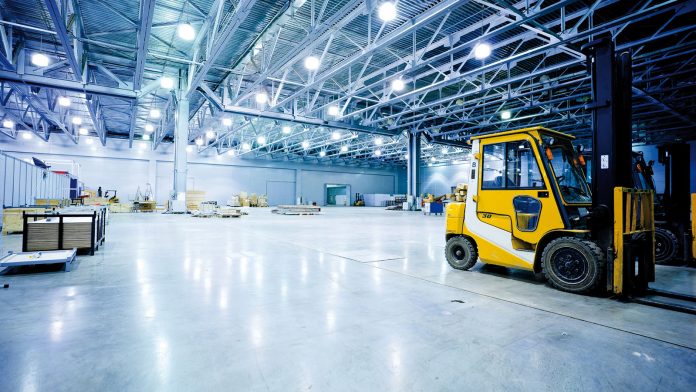
ECONOMY/The Monegasque industrial sector is getting ready for transformation. It is now the industries that are high value-added, non-polluting and use few m2 that are in favour with the government.
Whistles, banners, and above all much sadness and anger. On 30 January 2015, around fifty employees of the Robertshaw factory marched through the streets of Fontvieille to protest against their redundancy. Such scenes have sadly become commonplace in this district. “Rue du Gabian, death row!” This slogan, chanted during the demonstration, summed up all the desperation of the affected employees. It must be said that Monegasque manufacturing industry has experienced an escalation of redundancy plans over the last ten years. The balance sheet drawn up by the unions affiliated to the USM evidences this: “Just over 1000 people have been laid off in the industrial sector since 2004. Théramex alone has seen over 10 redundancy plans since 2004. With a total of 350 people laid off, from the Monaco site alone”. And the chain of disasters of sacrificed industries is a long one: Microtechnic, Innoge, Mecaplast, Monachem and Borgwarner have in turn suffered closures or restructuring.
“The government no longer wants us”
How can this chain of disasters be explained? As in most western countries, these Monegasque companies have been hard hit by relocations to low cost countries. But that is not all. Several factors inherent to Monaco have allegedly also worsened the situation: cost of rents, lack of space, and logistical and environmental constraints (1). So they do not delude themselves by any means in the unions. The prevailing talk is even very fatalistic, “The date is unknown but we know we’re going to disappear, little by little. Those who still have jobs today certainly have this fear in mind. The government no longer wants employees like us, but highly selective jobs. High value added employees, brains rather than labour. Manufacturing industry is now an eyesore for Monaco. Factories in the street… that’s messy. Forklift trucks in the street… that’s messy.”
Research & Development
Are these unions right to fear the disappearance of heavy and manufacturing industry in Monaco? And to see the sector gradually becoming a magnet for engineers? “It is clear that the government wants to target “clean” companies, with a limited impact on the environment, operating in a business that requires little space if possible, and that are preferably Research and Development (R&D) oriented,” explains Pascal Gaussin, president of GIET (Groupement d’étude industries de transformation – Processing Industries Association). “Production could be located in countries where industries have larger areas available and where manufacturing costs are lower. So it is a matter of attracting and welcoming to Monaco the noblest businesses as a priority, as well as the brains, engineers, technicians…” On the government side, it is no secret that a transformation in the industrial sector is indeed clearly in their minds. “It is fanciful to think that Monaco can reproduce its industrial base as it was predominantly established sixty years ago. Lack of space and logistics management constraints alone are dissuasive in this regard, “explains the finance ministry.
“Grey matter”
In a report broadcast on “France 3 Côte d’Azur” in March 2015, Finance Minister Jean Castellini was clear about the government’s aspirations, “We are evolving towards more grey matter. Design, development and invention can still take place in Monaco, but what is in the production area will perhaps fit in more in countries where labour is cheaper, and where industries have larger areas available.” So what are the promising segments that the government wants to attract to Monaco? And particularly for the Charles III block operation, a future industrial and services pole to be built in the westernmost part of Monaco. “Businesses that design, invent and develop are interesting for Monaco, whether industrial or not, as they bring added value and grey matter,” the government sums up.
New technology
More concretely, the finance ministry mentions in particular “engineering, prototyping, and industrial testing or pilot activities.” Clearly, taking the new information and communication technology (ICT) sector, this covers for example “3D and the image industry”, “computer modelling” and “connected objects”. The government also hopes to seduce businesses connected with the maritime environment, sustainable development and the environment. “The same applies to the wider medical and health sector, which in Monaco covers a very broad spectrum of activities. Enhancement of all this industry’s know-how can in itself constitute a prospecting pitch to interest innovative projects in being based in Monaco: medical equipment, pharmacy and chemistry, cosmetics and perfumery, biotech etc.” So there is no doubt about it. The transformation is moving forward.
_Sabrina Bonarrigo.
(1) According to IMSEE, industry accounted for 2892 jobs in 2015. This figure was 9.5% down (301 fewer jobs).
Helping hand/
Support for prospecting
Beyond the industrial bonus capped at 90,000 euro per company per year, the government has also set up “marketing support” for industries. “This is a still little-known device, despite the efforts to communicate economic expansion,” explains Pascal Gaussin, GIET president. “These are funds the government advances to a company that wants to prospect and develop a foreign market.” Basically, the company is only required to reimburse the state if and when its prospecting is successful and the revenue is achieved. “Obviously there are criteria to be met and a serious project to be documented. This is a very good initiative that can be compared to a sort of prospecting insurance,” Pascal Gaussin continues. This marketing support is capped at 30,000 euro. _S.B.
Three questions for
Caroline Rougaignon Vernin,
Elected member of the National Council and Industry Observatory member.
Must we definitively kiss goodbye to heavy industry in Monaco?
We should not be categorical, but overall – given our territory – it would be wiser to optimise our square metres by keeping only those operations with the most added value and exploring the option of outsourcing part of the production, when it requires large areas. Heavy industry needs space and access infrastructure. We are not well placed for that in Monaco. But the intermediate processing industry can still thrive here.
The consulting firm Katalyse has submitted to the government a report on the future of industry in Monaco in 2020. What does this study tell us?
It confirms what we already felt intuitively. First, that property supply must be strengthened, and that we must become even more attractive in order to attract new entrepreneurs. The study also tells us that higher added value activities generate greater tax and social resources for Monaco, and that our future companies must be able to live together with the urban environment. Therefore, ideally we should keep small-scale production in Monaco and steer large-scale production from Monaco.
Is it important to retain industrial activity in Monaco?
Monaco has developed and built its economic image with industry. So our Principality should retain its businesses and welcome new ones. At times, we need to support them in transformations that can also help them bounce back in some cases. This is a side of the economy that has very useful momentum when other segments are performing less well. It brings in VAT and social security contributions. Our companies also enable us to extend our territory through their exports, and as a spin-off give work to other sectors of activity in the services area, be it catering, auditing, accountancy, cleaning or printing.
_Interview by Sabrina Bonarrigo.
Fontvieille: industrial buildings “on their last legs”
REDEVELOPMENT/In order to be able to renovate some ageing industrial buildings in the Fontvieille district, the government plans to temporarily relocate to the Charles III block, a future “business district” that is to house new generation, service and logistics industries from 2025.

You need only walk around the start of rue du Gabian in Fontvieille – in the midst of the lorries and countless pallets – to be aware of this. Some industrial buildings, whether public or private, are particularly dilapidated. According to some people they are even completely “on their last legs”. “The Thalès building is clear evidence of this,” notes Pascal Gaussin, president of the GEIT (Processing Industries Association – Groupement d’études des industries de transformation). “Fortunately the building belongs to the state. So we can expect its total reconstruction, as was the case for Le Vulcain, opposite Stade Louis II.” But Le Thalès is not the only building that deserves a serious makeover. Its neighbour, Les industries, does not look very good either, and the government does not deny it, “A number of industrial buildings are now ageing, and will require being brought up to standard or even a substantial redevelopment,” admits Finance Minister Jean Castellini. So, at the Department of Forward Studies, the Business Development Agency or the Ministry of State, they are necessarily already considering how to give a facelift to these buildings. And more broadly to the Fontvieille industrial area. “We need to start being concerned about this district, which is certainly a district of the future,” says the Department of Forward Studies, Urban Planning and Mobility (DPUM). “But for the time being it is difficult to plan as many institutions are privately owned. The state therefore has no control over the land management.”
Category-operation
That is the whole issue. Though Le Thalès, Le Triton or La Zone F belong to the state – so it is easy to envisage their demolition/reconstruction and maintain industrial activity there – other buildings, namely Les Industries, L’Aigue marine and l’Albu – are privately owned. So what will happen to these premises in time? “It is impossible to know for the time being,” says Pascal Gaussin. “But given what we see, it is reasonable to think that these private industrial buildings will increasingly house service activities. And perhaps even private accommodation one day.” Obviously it is difficult to force these owners to retain an industrial activity there at all costs, “We had suggested that the Prince ensure that these private owners, who were initially granted planning permission for an industrial building, undertake to retain that type of activity as priority. But it seemed to constitute a constraint to private investment and free enterprise of the owners,” says the GIET president.
The only certainty at present is that a solution has already been found for starting to redevelop this ageing industrial area. The government maintains that the Charles III block future operation will first be “a category-operation” aimed at accommodating the occupants of old industrial buildings belonging to the state. For the time needed to renovate them. Or to demolish and rebuild them…
A 17 000 m2 industrial area
Situated in the westernmost part of Monaco on the border with Cap d’Ail (on the abandoned SNCF land), the Charles III block will therefore certainly serve as a category-operation, but above all it is a future industrial and services pole. “This block, which is wholly owned by the state, has an area of approximately 6700 m2,” explains Séverine Canis-Froidefond and Frédéric Kappler, DPUM Director and Deputy Director respectively. It is precisely this unit that defined the “building potential” of the block. As a result, this project could include 27,000 m2 of tertiary floor space with offices and hotels, 17,000 m2 of industrial floor space, a car-park with around 530 spaces and a 8100 m2 logistics area. On the timing side, the work should start in 2020 once the Pasteur block is completed. Although the precise phasing of the work has not yet been planned, the building site could be open for around 5 years, meaning completion in 2025. So what will this future Charles III block include?
Business district
For the government, the purpose of this future property project is clear, “Because of its location, service road and environment, this block has the potential to house activities which are very varied – industry, services, logistics – and of great importance. Hence the interest in favouring flexibility,” the authorities explain. “Consequently, being ideally situated, it allows us to envisage the implementation of a business district, with the option of creating a substantial area for tertiary platforms and the implementation of an efficient logistics system connected to the Post Office sorting centre and the dry recyclables treatment centre located in the Pasteur block” (see box). The government even states that construction of such a property complex will allow for “a connected building”, known as “intelligent”, designed from the outset for new generation industrial activities. That is to say, the much talked about “Industry 4.0”. “This future block can therefore serve as an “attractive product” likely to be enhanced as an element of attractiveness in the framework of potential prospecting activities which would be carried out,” the government adds.
Place synergy
Neither is it a coincidence that this future business district 4.0 was established in the west of Monaco: “This block, located south of the former railway land, is a future access point for the city and in immediate contact with the industrial component of the Fontvieille district and the shopping area. Thus there is a destination and place synergy logic,” states the government. Another reason put forward is that this part of Monaco is located near a number of road infrastructures that are already completed or underway: the Saint-Antoine urban development zone service road linking the lower cliff road and Fontvieille, the ridge (Boulevard du Larvotto), and of course the future exit of the downhill tunnel. “Also, remember that a city access point car-park with over 1800 spaces – the so-called “border-dissuasion” car-park – will be built at the access point to Monaco, at the Exotic Garden level. The goal is to create easy pedestrian connections from this car-park to access the Charles III block and Fontvieille, particularly with lifts,” clarifies the DPUM.
“Late” operation
But for some observers, although this project may boost Monaco’s industrial sector, it is coming too late, “First I was very pleased to learn that the aim of building a large-scale industrial building had not been abandoned. That is good news that evidences the government’s commitment to industry,” says Pascal Gaussin. “Unfortunately, this operation will be a bit late. It seems that the project should start after construction of the new Princess Grace Hospital Centre. So, at best, the work will begin in around 2021, with completion by 2024-2025 at the earliest. However, there was already talk of this operation in the early 2000s…”
_Sabrina Bonarrigo

